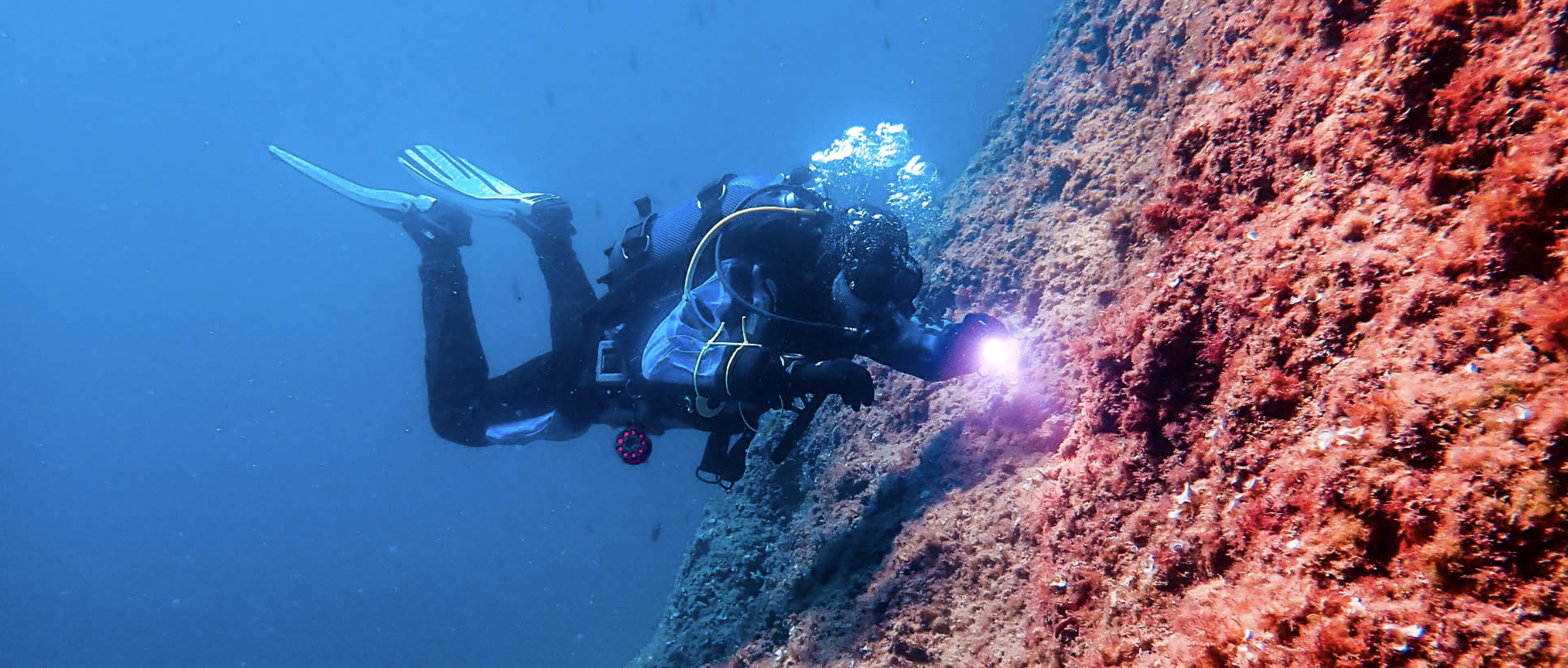
A true diver. A traveler for many years and a lone wolf—though perhaps not as lonely as we’ll soon discover. Bartosz, known among his friends as Brzoza, fascinates us with stories from the underwater world, where he sometimes feels more at home than on land.

(…) I could spend four hours underwater, using a scooter to reach a place called the Blue Abyss. It’s a massive sinkhole that drops more than 80 meters into the ground. After two hours of swimming, you suddenly emerge into a space that feels almost unreal. I’ll never forget it.
I’ll start with some basic, perhaps even a bit cliché, questions. What certifications do you hold, and how can someone get started with diving?
I’m a recreational diving instructor with PADI, and I teach courses here in Mexico. For most people, the easiest way to begin their diving adventure is to simply take the plunge and sign up for the Open Water Diver course, or OWD. It usually takes three to four days and gives you everything you need to start exploring the underwater world safely.
But not everyone wants to jump straight into a full course. That’s where Discovery Scuba Diving, or DSD, comes in. Think of it as a first taste of diving. In a single day, you learn the basics of safety and how diving works, then head into shallow water—either in a pool or at the beach—to experience it for yourself. It’s a chance to find out whether being underwater feels exciting, peaceful, or maybe even a little addictive. And if you decide you want more, that first day already counts toward your certification.
Over the years, my own diving journey has taken me much further. I’m also a technical diver certified through IANTD and TDA. My cave diving is based on the Full Cave Diver certification from IANTD and the Multistage DPV Cave Diver certification from TDA.
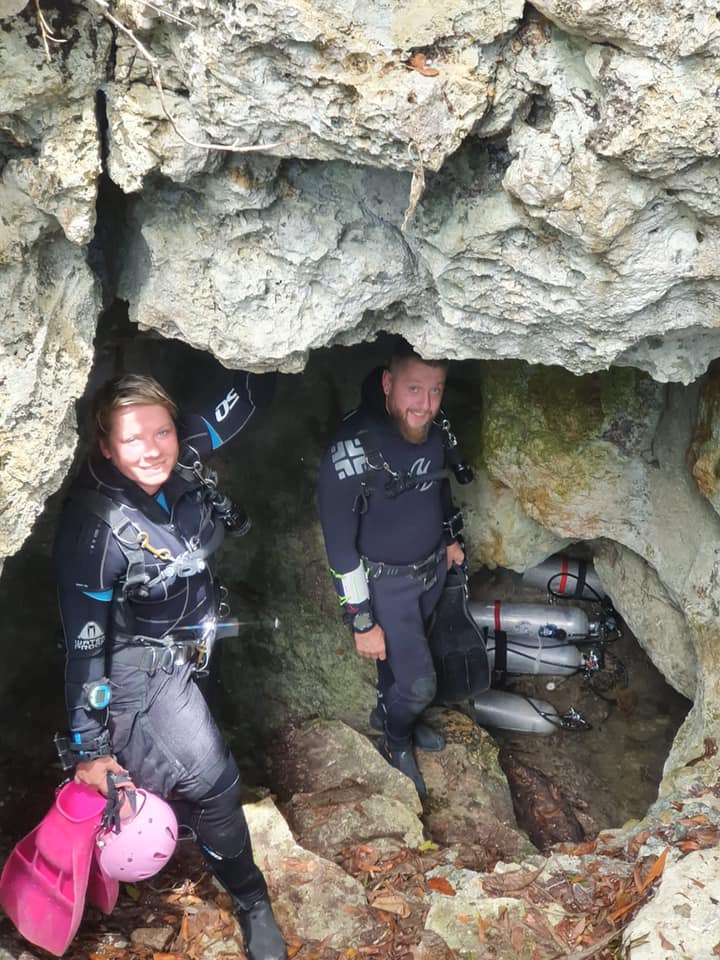
At that point, diving becomes something entirely different. You’re no longer exploring open water but entering a world of underground passages, overhead environments, and vast cave systems hidden beneath the Yucatán Peninsula. It’s a side of diving that most people never get to see—and that’s exactly what makes it so fascinating.
What do you enjoy most about diving?
That’s a really difficult question. I think it all started with curiosity and, above all, the challenge of being in an environment like water and learning how to breathe in it. Everything I learned and every step I took was a challenge in its own way. It wasn’t easy, but it was enjoyable right from the beginning. What helped was that I was curious about everything—how to do things better, how to become a better diver, and how to gain more freedom underwater. It was always about taking on something new and pushing my limits. These days, living in Mexico and spending so much time cave diving, I think diving has also become a form of meditation for me, my own little Zen. The world above disappears, and I can slip beneath the surface into a completely different world, a different dimension, a different space. After several years and hundreds of dives, it has become a part of who I am. It’s a world where I feel comfortable, where everyday problems fade away, and where I can truly disconnect from daily life. For me, that’s one of the greatest gifts that diving has to offer.
Why Mexico? What makes the caves around Tulum so special?
I came to Mexico because of the caves of the Yucatán Peninsula, although before that the country had never really stood out to me. When I started diving in Asia and later spent some time in Sardinia, I began exploring small caves and grottos during sea dives. I found them fascinating. During my first season in Sardinia, I met several cave divers who told me about the cave systems near Tulum. That’s when I learned that the Yucatán is home to the largest underwater cave systems in the world. There really is nothing else quite like them. Nowhere else will you find such a huge concentration of caves that are so vast, diverse, and endlessly fascinating. The largest system stretches for more than 360 kilometers, made up of countless passages, tunnels, and chambers. It was even formed when two separate cave systems were eventually connected and became one enormous network. There are so many routes and hidden corners that I probably wouldn’t have enough time in a lifetime to explore them all. That’s part of what makes them so captivating. Once you start diving in these places, it’s easy to understand why people become a little obsessed with cave diving.
Another thing that makes the Yucatán unique is the water itself. Because the peninsula is almost entirely made of limestone, the water is filtered naturally and becomes incredibly clear. As divers, we talk about visibility, and here it often feels almost unlimited. In the ocean, visibility may end after ten or fifteen meters. In some lakes, it can drop to just a meter or two. But in many of the cenotes, you can see astonishing distances in every direction. The water is so crystal clear that it sometimes feels as if you’re flying rather than swimming. It’s a remarkable experience and one of the reasons these caves attract divers from all over the world.

How long have you been diving?
I’ve been diving since 2016, when I moved to Asia for six months and ended up living on the tropical island of Tioman in Malaysia. Back then, life was pretty simple. I spent my days swimming, climbing, and living on the beach with limited internet access. Naturally, I started looking for new experiences, and that’s when I discovered diving. There was a dive center on the island, and I quickly became friends with the people working there. That’s how my diving journey began. After my first few dives and completing my Open Water course, they soon invited me to help out around the dive shop. Not long after that, I moved to the other side of the island and started working with another dive center in exchange for courses and heavily discounted dives. What I had most at that time was freedom and time. I could slowly explore this new world and spend more and more hours underwater. One step led to another. And then, somehow, six years passed. Today, I’m a diving instructor and cave diver in Mexico, where I’m already spending my fourth season exploring the underwater caves of the Yucatán. Looking back, it’s hard to believe that it all started on a small tropical island with a simple beginner’s diving course.
Tell me, what dangers do divers face beneath the surface?
As an instructor, I often joke that the greatest danger underwater is usually ourselves. In most cases, the human factor is the leading cause of diving accidents. Water is already an environment that humans aren’t naturally designed for, which is why diving comes with procedures, safety rules, and training. These aren’t there to make diving complicated—they’re there to keep us and our dive buddies safe. The more seriously we take them, the safer diving becomes. When people think about danger, they often imagine sharks or other wild animals. The reality is far less dramatic. Sharks and marine life generally aren’t interested in us, and incidents are extremely rare unless the animals are provoked. In fact, we’re usually a much bigger threat to ourselves than any creature underwater. Sometimes the real dangers are less obvious. In busy diving destinations, for example, boat traffic on the surface can be a serious concern. Depth can also become dangerous, but usually only when divers ignore their training, push beyond their limits, or stay underwater longer than they should. At the end of the day, most problems underwater can be traced back to poor decisions, complacency, or skipping basic safety procedures. That’s why good training, experience, and respect for the environment are so important in diving.
Do you ever find treasures like Indiana Jones—sunken ships or Mexican gold?
I wish it were that easy. Unfortunately, I don’t come across hidden treasure, and definitely not gold. Then again, I’m not exactly out there searching for it either. That said, I’m sure there are still plenty of undiscovered treasures hidden beneath the world’s waters. For divers, though, treasure can mean something very different. Beyond the incredible marine life and underwater landscapes, some of the greatest treasures are shipwrecks. Wreck diving is one of the most fascinating parts of the sport. Exploring vessels and other objects that have rested underwater for decades—or sometimes centuries—feels a bit like stepping back in time. Depending on your training and experience, you can explore all kinds of wrecks, from small boats to massive ships, each with its own story to tell. That’s what makes them so captivating. Every wreck is a piece of history waiting to be discovered.

For example, a wreck-diving safari in the Red Sea is an incredible experience. You can dive four times a day, exploring wrecks from different periods, different places, each with its own history and cargo. Every dive tells a different story.
When it comes to Mexico, however, the greatest treasures for me are the remains of our prehistoric ancestors. Some of the oldest human remains ever discovered in the Mesoamerican region were found here. It’s also possible to dive among the remains of prehistoric animals, such as a mastodon’s jawbone, the shell of an ancient turtle, or the bones of a giant sloth or a saber-toothed cat. For me, those are true treasures.
The same goes for entering a cave and, after an hour of diving, reaching a place that was completely dry ten thousand years ago. Back then, animals would venture deep inside in search of water and never make it back out. Today, their remains can still be found there. As a diver, I have the opportunity to see those remains with my own eyes. That’s something truly special for me—a real treasure hidden beneath the surface.

Many Polish tourists—and even seasoned divers—travel to Mexico specifically to dive with you. How should someone prepare for a journey into the cenotes with you, and why is it worth it?
Yes, quite a few people come to visit us. By “us,” I mean Polish Corner, the company run by Gosia, where I work. Most of the divers who come here already have some experience and know exactly what they’re looking for: exploring the cenotes of the Yucatán. A typical trip lasts about a week. During that time, we travel from one cenote to another, diving in different cave systems and showing people some of the most spectacular underwater environments Mexico has to offer. This is the core of what we do. Most of our guests are experienced divers who feel comfortable underwater and want to experience diving in overhead environments for the first time.
We also run beginner courses from time to time, although that’s a smaller part of our work during the season. For non-divers and travelers, we organize all kinds of adventures as well—trips into the jungle, visits to dry caves, and explorations of ancient ruins. We usually avoid the most obvious tourist spots and focus instead on places that remain largely untouched by mass tourism. The people who come to us are looking for an adventure, so we try to take them somewhere special. Often, we’re the only group there. It might mean meeting local communities, encountering wildlife, or exploring caves and ruins hidden deep in the jungle. Many of these places are difficult to find without local knowledge and a good guide. You won’t always discover them through a quick internet search. That’s part of the experience—the feeling that you’ve stepped off the tourist trail and into something more authentic.
For me, that’s one of the most rewarding parts of the job: helping people discover a side of Mexico that most visitors never get to see.
Could you explain exactly what the diving levels are, and is it expensive?
The basic level is the certification that allows you to dive recreationally — this is our OWD (Open Water Diver). After that, we have Advanced Open Water Diver, then Rescue Diver, which is a diver who is trained in rescue skills. Later on, we move into more professional recreational levels, like Divemaster — which is basically a guide — and then Instructor. These are the main levels in the PADI system. Other diving organizations are a bit different, but overall it looks very similar.
We also have many specialties, like wreck diving or cavern diving, depending on what people need and where they dive. It depends on the environment — cold lakes in Poland, the Mediterranean Sea, the warm Red Sea, or cenotes in Mexico. Each place is a bit different in how you dive, so you need to adapt to local conditions and challenges. That’s why different specialties exist. Decompression diving already belongs more to technical diving organizations, which also have their own levels and certifications, allowing divers to safely do more advanced and demanding dives.
How much does it cost? A basic diving course in Mexico is around 500 dollars. Prices are similar worldwide, but of course you can find places where it’s a bit cheaper or much more expensive. Still, I believe it’s better not to save too much on this kind of course, because the price usually reflects the quality and how much time the instructor can spend with you. The more time you get with your instructor, the more you learn, and the more comfortable and confident you feel afterward when diving.
Could you mention a few of the most interesting places that stayed in your memory?
Cenotes… I could talk about them for hours. Not long ago I was constantly busy because I was doing a cave scooter course (DPV diving), and I could do a four-hour dive to reach the Blue Abyss cenote in Riviera Maya, Mexico with a diver propulsion vehicle. It’s a huge sinkhole in the ground that goes down more than 80 meters. After two hours of diving, you suddenly arrive in a place that is just incredible. The views and emotions I experienced there are something I will never forget.
I also often think about Sardinia and my first dives in the cliff holes around Alghero, on the northwest coast of the island. Every diving location has its own unique things that stand out. For example, in Malaysia I still remember the incredible number and variety of nudibranchs I saw during my first courses and dives. I’ve never seen so many anywhere else in the world.
In the Red Sea, after a few good years of diving, I finally had the chance to dive with dolphins and observe sharks from quite close. Experiences with large predators like that are definitely something you don’t forget quickly. I also remember fascinating wrecks, like the SS Thistlegorm in the Red Sea, which I explored during a night dive — it left a strong impression on me for a long time.

I’ve also heard that people with disabilities can also take on the challenge of diving. You’ve run workshops like that, right?
I started working underwater with people with disabilities and teaching them how to dive back when I was part of the diving collective Bojka, founded by Katarzyna Pierzyna together with her colleagues. At that time, I had the chance to help as an instructor during different water and underwater activities. My closest friend is Michał Woroń, who uses a wheelchair and lives with muscular dystrophy.
After those experiences, we felt we wanted to expand what we could do and slowly start changing how accessible diving is for people with disabilities. Step by step, we created a foundation focused on that. This year I also became an instructor in the HSA federation (Handicapped Scuba Association). My instructor was Joanna Pajdak, a wonderful person who has been, for many years, in an amazing way “breaking the myth” and opening up the underwater world for people with disabilities.
A lot has happened, but I think this is just the beginning of the journey — both for me and for the people with disabilities I work with in the water.
Thank you for the conversation. You can follow Bartek’s adventures on Instagram @koivu84 (Bartosz Brzoza). If you have any questions about his passion, he will probably be happy to answer them!




You may also like
-

Beyond the american dream. The other side of Los Angeles
The first thing that catches your attention in Los Angeles isn’t the Hollywood sign or the palm trees. It’s the tents. They line entire blocks beneath swaying palms, only minutes…
·
-
Crystal clear waters, perfect weather, and no crowds. Welcome to Corsica – the Mediterranean’s island
Known for its charming beaches and crystal-clear blue waters, Corsica seems like the perfect destination for a European escape. This picturesque Mediterranean island, located between France and Italy, captivates visitors…
-
Julio about the green paradise – São Miguel, an unusual island in the Azores
How does life feel on an island surrounded by the Atlantic Ocean? With its green landscapes, colorful scenery, and peaceful sounds of nature, São Miguel feels far away from busy…
·